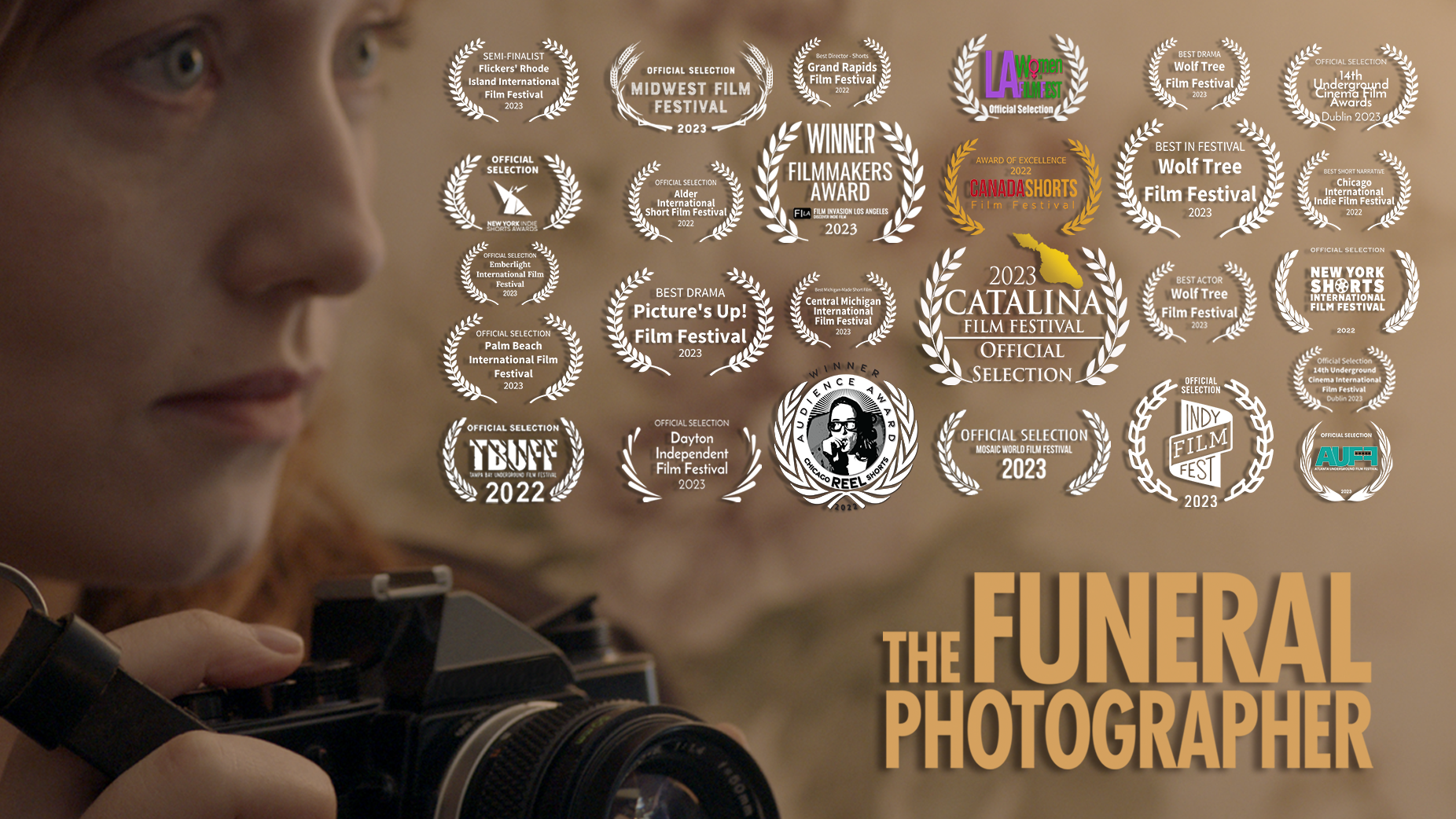
We’re so grateful that THE FUNERAL PHOTOGRAPHER was screened at over 25 film festivals throughout the U.S., Canada, and Europe and won 13 awards, including Best Actor, Best Drama, Best Director, Best Screenplay, and more.
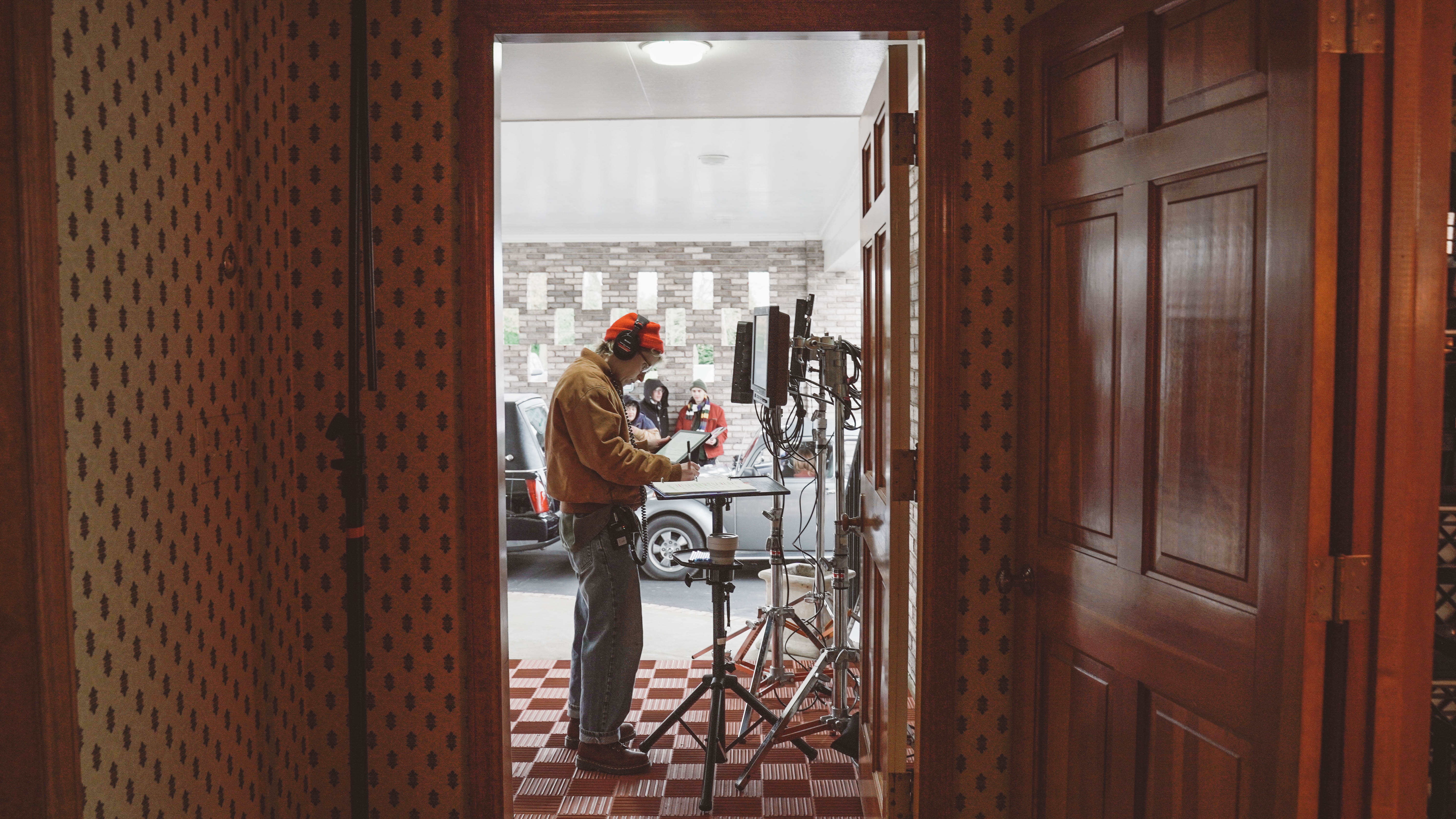
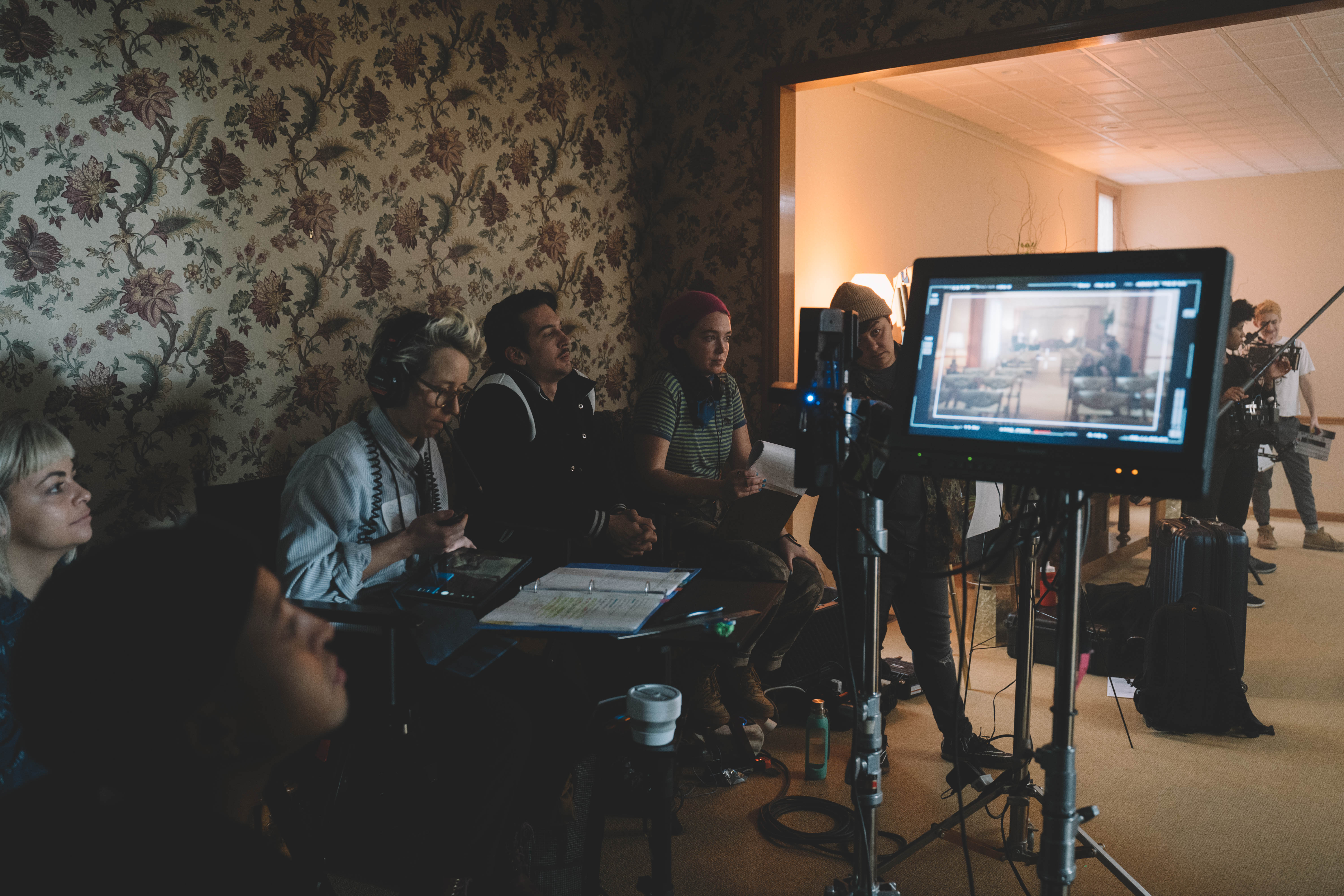
Along with the full film available here, there’s also our trailer, a short behind the scenes video, an interview with the cast and crew from the Film Invasion Los Angeles Film Festival, some photos from the making of the film, and a section with info, spoilers, and easter eggs…
Full film
Trailer
BEHIND THE SCENES
FILA Q&a
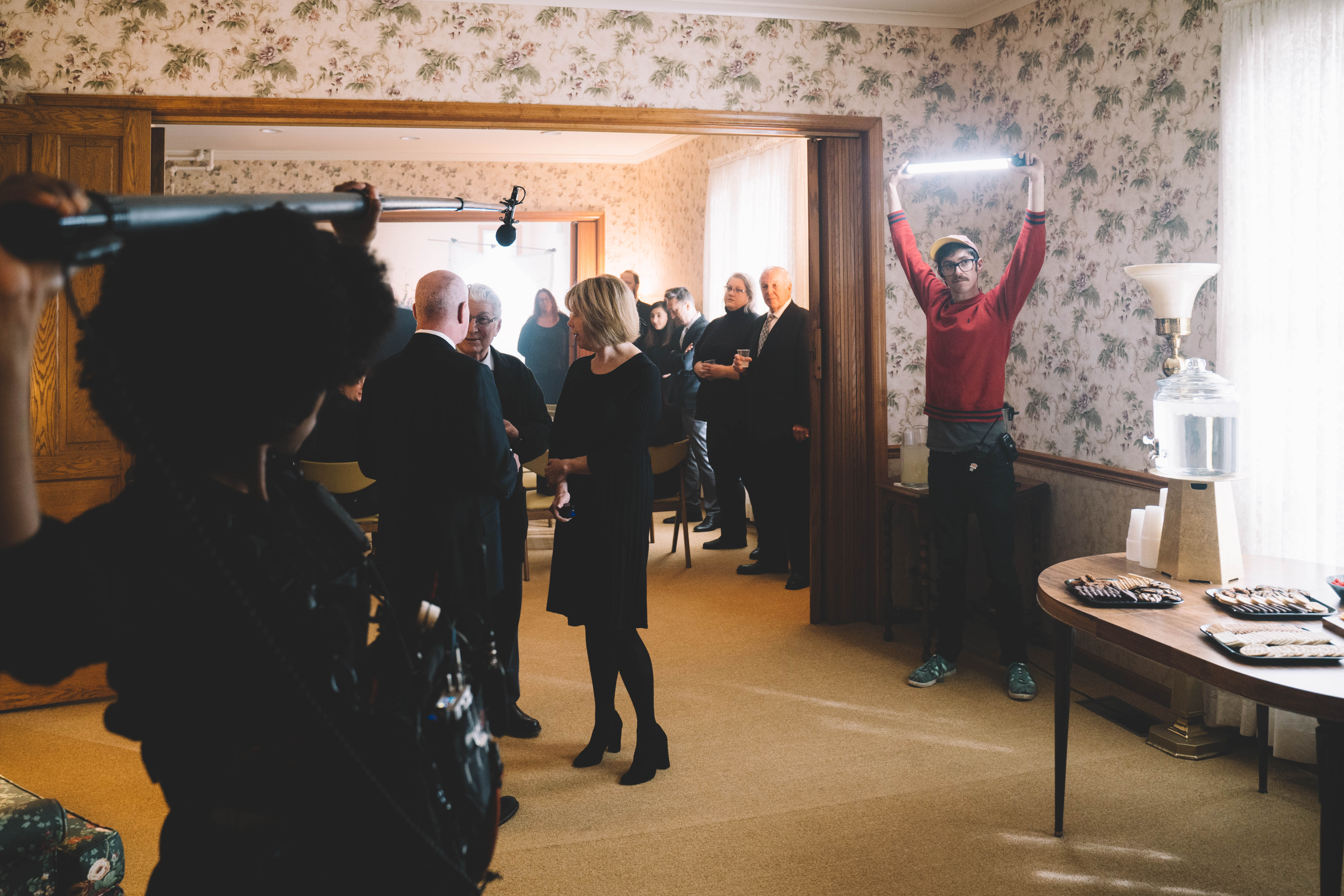
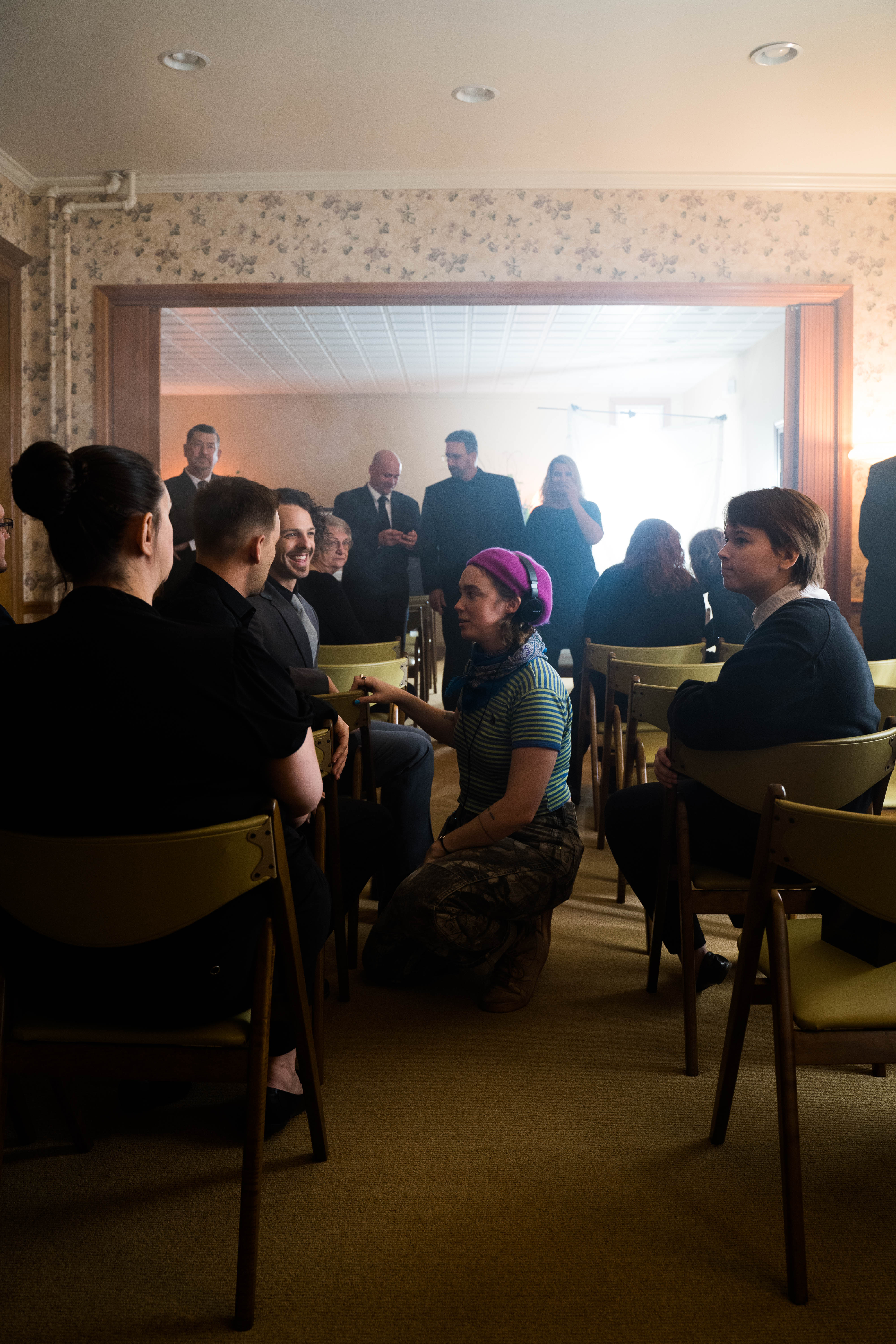
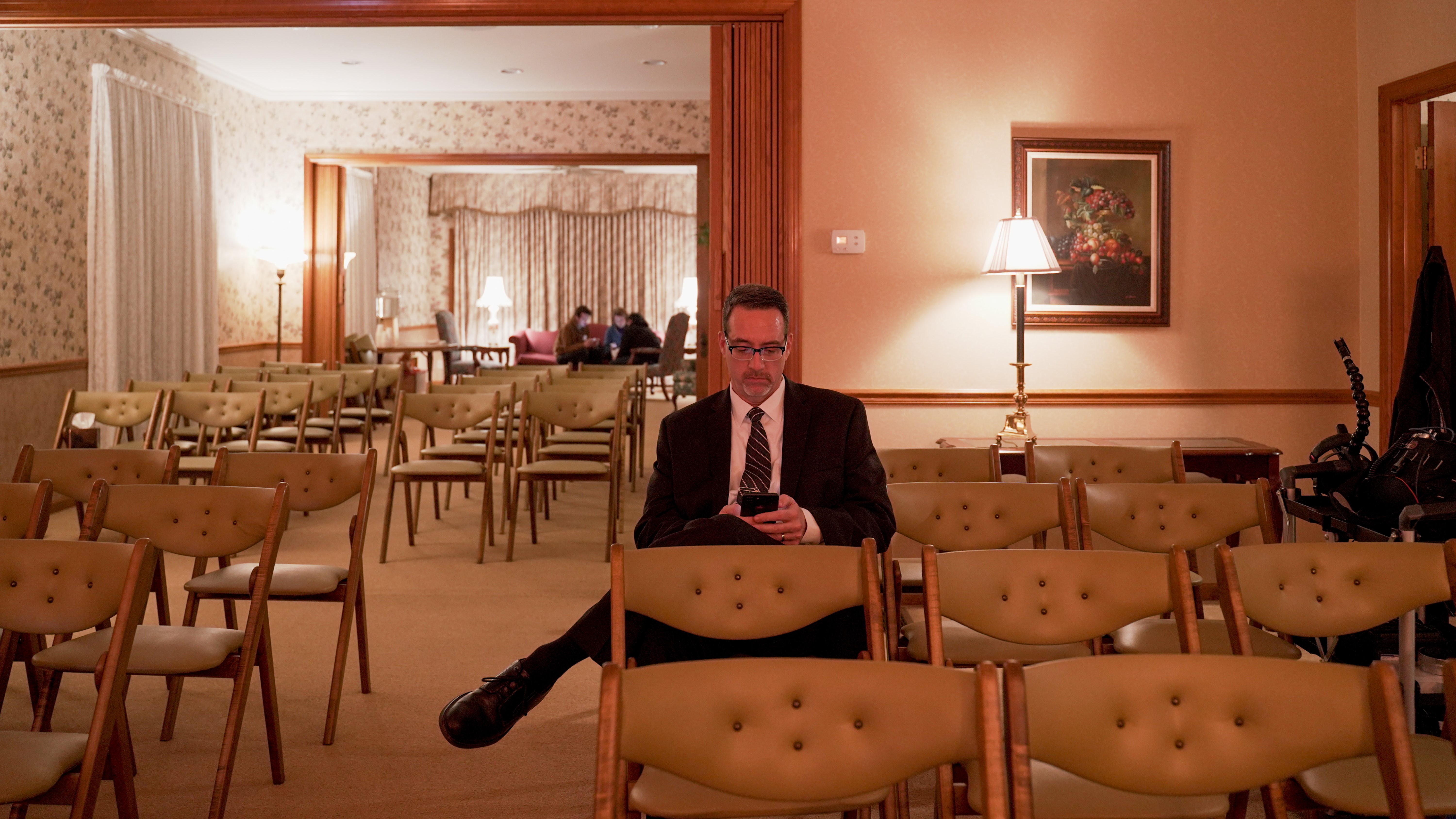
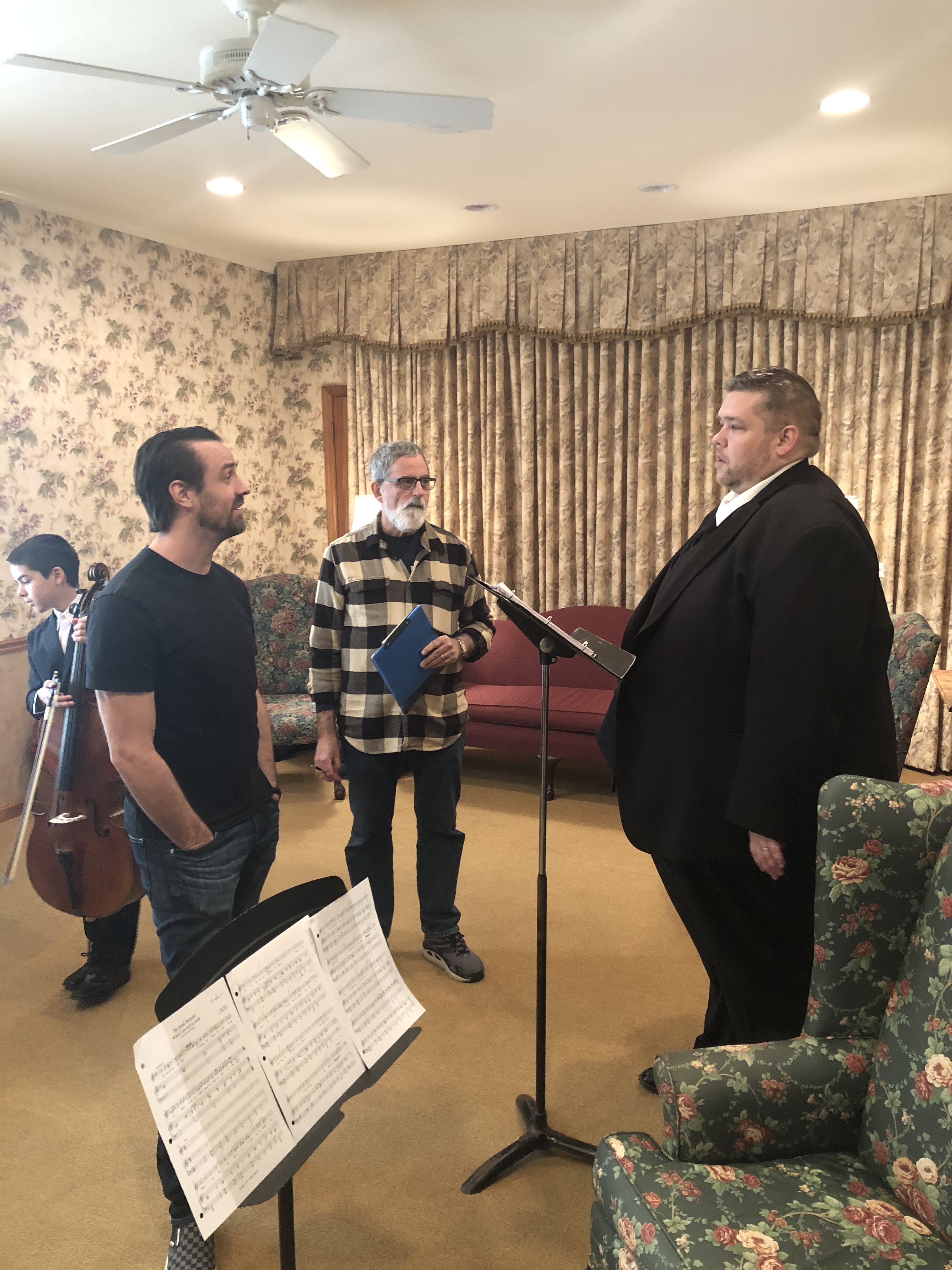
production PHOTOS



info, spoilers, & easter eggs
music
FILM SCORE: Huge shout-out to our composer Matt Dahan! Because this is a subtle narrative, we wanted the score to be another character in the film, much like the 100-year-old funeral home. Along with his musical talent, Matt also introduced the narrative idea of a “ticking clock” woven into the score, which begins as soon as Julie starts taking photos, and gets progressively faster as the tension builds.
One of our favorite things Matt did with the score was creating a deconstruction of Dido’s Lament in the sequence leading up to Julie seeing herself in the casket (even before we hear it sung by the Opera Singer). He did the same at the end of the film when the husband enters, this time with a more somber version for the final twist.
OPERA SINGER: My good friend Paul Mow is a classically trained opera singer. During the rewriting process, his character evolved to become the film’s red herring – the person the uncles are waiting for that we (and Julie) think is a threat until we learn that they were simply waiting for the singer to arrive. When I approached Paul to be in the film, he said, “This song is typically sung by a woman, and I’ve always wanted to sing it.”
CREDITS SCORE: “The Trauma of Loss” by Miles Avida mirrors the emotional journey of the film. We made the conscious choice to have the credit sequence longer than typically seen in a short to give the film a bit of a feature-length feel, while providing a meditative space to reflect on the subtleties of the film.
characters
JULIE: Even though something about this process is suppressing Julie’s recognition of loved ones (the mints?), her emotional connections continue to try and make their way to the surface evidenced by her reactions to The Uncles (her favorite relatives), Charlie (her brother), and David (her desire to go talk to who we eventually find out is her husband).
THE ATTENDANT (Charlie): The job of the attendant can’t be an easy one with having to stay focused and professional while guiding Julie to gather as many photos (memories) as possible before she discovers she’s dead. We see a quick glimpse of Charlie’s connections when he nods to a mourner at the beginning of the film. Then, the real emotional shot for him is when he sees his daughter ask, “Mommy, do you think she’ll see Daddy?”
THE UNCLES: The reason Julie senses danger is, deep down, she knows her husband is devastated and she’s afraid of what might happen. That buried (no pun intended) fear manifests as suspicion of danger as her favorite uncle and his husband are impatiently waiting for some mysterious person to show up. Ultimately, it turns out they’ve only been waiting for an opera singer. As part of the twist at the end, Julie was actually correct about sensing danger for David because he dies of grief by committing suicide.
This is perhaps my favorite example of Julie’s true connections trying to make their way to the surface. When we look back at the dialogue between Julie and Charlie, we can feel the brother/sister sibling rivalry; including the reference to how she used to call him a “douchebag” and the sarcastic look she gives him at 00:05:08.
Julie’s uncle and his husband were two of Julie’s favorite people, which is why she made him promise to give her eulogy. This is also a clue that she knew she was going to die for some time. Another clue to how much they meant to Julie is her emotional reaction when she sees their photo at the end.
THE NIECE: We can see the joy on Julie’s face when she sees her niece. The niece is also a mirror of the relationship Julie has with her favorite uncle(s). The difference is, the uncles are grieving the loss of Julie (and, later, the husband), but as we see in the final sequence, the little girl is now grieving her favorite uncle (David). In the unheard conversation the mother is having with the niece in the final scene, I believe she is trying to explain suicide to this devastated little girl.
THE HUSBAND (David): Julie has an attraction to David and wants to go talk to him, ostensibly to ask who else he would like her to specifically photograph. The Attendant catches her just before she crosses the room, which would have certainly ended her taking photos (gathering memories).
We’re given multiple hints about what kind of guy David is: The story of his first date with Julie where she says, “I suppose you should kiss me now so you can go,” and he just gets out of the car. The woman telling the story then says, “They were always doing goofy stuff like that.” Which tells us the fun David and Julie had together. We also hear how he was right by her side for the last six months – ostensibly because of a long illness – and that why he’s “one in a million.”
We’re often asked “Wow did Julie’s husband David die?” The answer is suicide and here are the clues to that final twist:
- When Julie is seeing herself in the casket, David says, “What am I going to do without my Jules?” And Julie says to herself, “I don’t know.”
- When Julie’s brother Charlie hands her the envelope to become the next attendant, she asks, “Already? Who is it?” This tells us that it was shortly after the funeral and we see on Charlie’s face the terrible news he must now give her.
- When David enters the funeral home in a state of confusion, Julie tells him, “Actually… you’re a little early.”
NARRATIVE LAYERS
Since this film was designed to be watched multiple times to have a different experience each time, here are a handful of angles we can experience the story from:
- On the first viewing, we think something weird is going on. In hindsight, what’s actually happening in that room is just a normal funeral (except, of course, for the two ghosts trying to make sure memories of loved ones make their way to the afterlife).
- Looking at the story from The Attendant’s perspective. What’s it like for him to have to keep focus while being surrounded by loved ones, including his widow and daughter?
- From yet another angle, it’s the story of the mourners as represented by all the comments about Julie and David (foreshadowing to set up the final twist). One of the saddest moments for us is watching the two uncles shuffle across the room to the snack table attending the second funeral within a week.
- Perhaps the most powerful angle is when we look at the story from another perspective, this is actually the husband’s story since much of the focus is on him, including him being the final twist.
SYMBOLS & EASTER EGGS
NO PARKING SIGN – Specifically chosen with two arrows so that when Julie pulls up behind the hearse, this easter egg is meant to show that it will be her in the hearse.
FUNERAL FLAG – My (step) father who helped raise me since I was four died a few months before shooting. This flag is from his funeral.
“SORRY I’M LATE” – A fun little easter egg referencing the phrase, “You’ll be late to your own funeral.” This also provides narrative juxtaposition for when Julie tells David at the end, “Actually… you’re a little early.”
THE MINTS – One connection that is rarely noticed until we share it – that came from our Production Designer (Chris Tuttle) and Wardrobe Dept. Head (Chloe Doherty) – is the line on the mint box is the same line on The Attendant’s collar. While the mints are still open to interpretation, for me, they were related to her “last breath” and something that represents whatever this mysterious Funeral Photographer process is. Plus, she’s been dead for days and would likely have bad breath.
THE VACCUUM ROOM – When I wrote the script, I envisioned this surreal space as the room where the photos are developed. During editing, this sequence was tinted red, and we referred to it as “the red room.” We ultimately decided that choosing that bold color was too on-the-nose and decided on a more subtle approach.
THREE WINDOWS – In the afterlife room Julie and Charlie’s heads are framed by these blown-out windows. The third window is empty representing the next photographer in this ongoing cycle.
WOMAN ON LEFT – Even before we learn that the husband is the next funeral photographer, there’s a clue to who will be after him. When we’re going up the aisle, we see the woman on the left suddenly grab her chest as she is about to have a heart attack.
QUESTIONS
Q: What happens if the photographer doesn’t get all the pictures of loved ones before they find out they’re dead?
A: We’ve been asked this one quite a bit. I imagine there are cases where the Attendant isn’t successful in keeping the photographer from finding out they’re dead too soon. Some interesting stories to be had there!
Q: Is it only family members who are connected in the photographer/attendant cycle:
A: We’ve been asked this one a lot too. The answer is… I don’t know for sure, but I believe there must be some kind of emotional connection in the cycle.
Q: What is this mysterious Funeral Photographer process?
A: While it remains a mystery, the only clue we have to the process is when Julie tries to give Charlie the photo of his widow and daughter, he says, “Thanks, but that’s not how this works.” This suggests that these memories are only for the photographer.
 Subtexter Films